
Many people across Europe saw the coming of the Vikings as divine punishment, but what really caused the people of Scandinavia to take Europe by storm? What made them capable of pulling off these raids? There are many possible explanations, although much is speculation. Some key candidates to be discussed in detail are:
- Technological advancements
- Centralization pressures
- Environmental change
- Population growth
- Trade/ Economics
For now, I will be rather brief with much of the following discussion, since much of this material will be showing up again later on. Still, it is good to understand the things that allowed the people of Scandinavia to stand out during this time period. Just be aware that I will be revisiting these elements with more detail and vigor in the future. Feel free to send me an ask if you don’t want to wait or if you have questions about the following material.
Technological Advancements

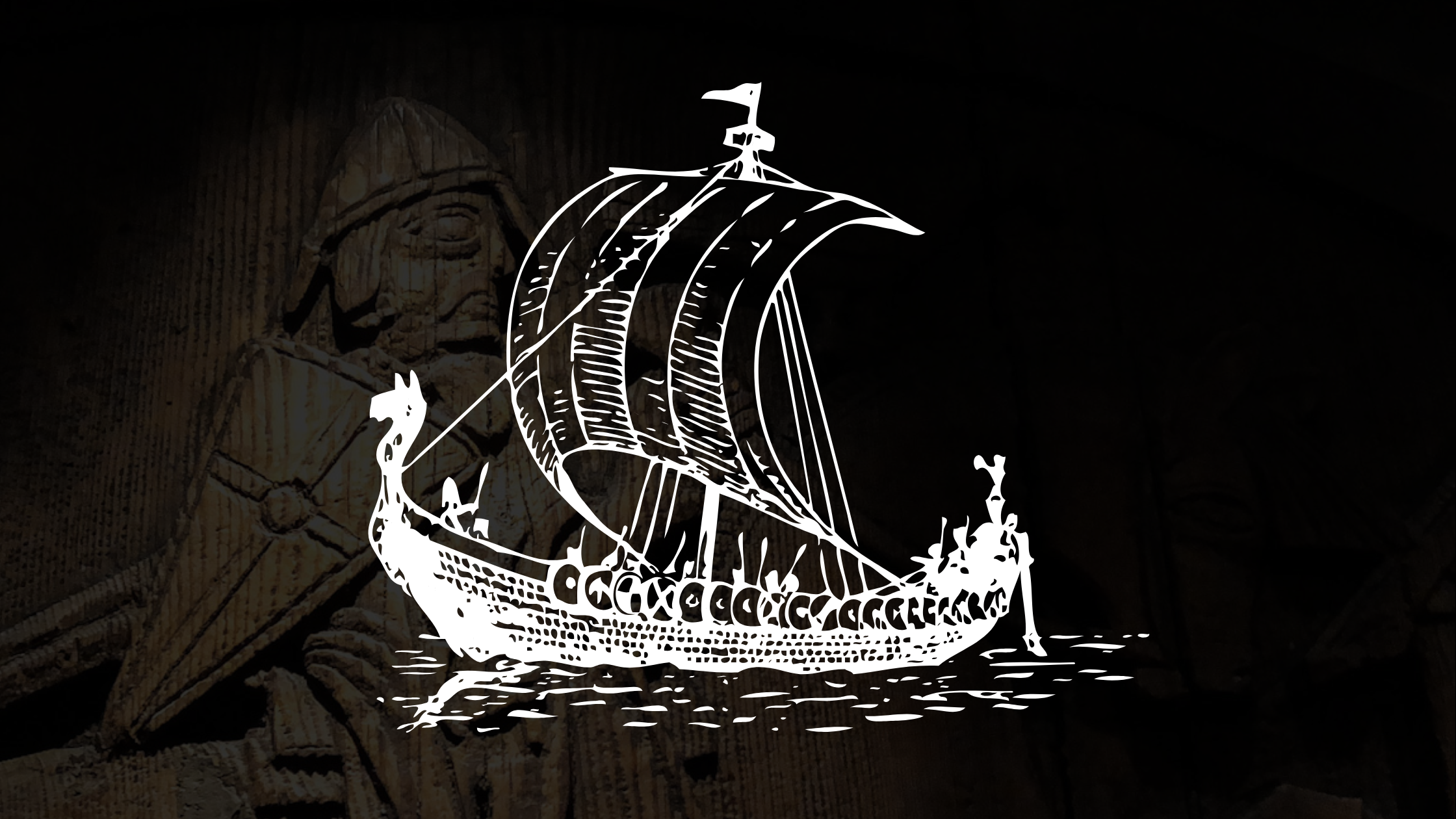
The Viking longship, as I am sure will be of little surprise to many, was the ace of their deck. The Scandinavians were naturally suited for heavy wartime development for many reasons: They are surrounded by water, most settlement was coastal or at least had access to the coast, and sea travel was far easier than land travel.
Their ships were much more sophisticated than the rest of Europe at the time, being lighter, faster, and slimmer. Yet, the most impressive (and most important for raiding) was the shallow draft that enabled their ships to easily slide up rivers. They were able to withstand the rough, open waters of the oceans yet also glide over the tops of more shallow waterways.
It is also regarded that this advancement was more of a prerequisite than a product of the age itself. Although gaining its fame from the Viking Age, ship motifs were already prominent in artwork dating before this period.
Centralization Pressures
Europe (and when I use this term I mean Christendom, or Christian Europe) was generally more politically advanced than Scandinavia at this time. So although the Vikings had impressive ships, they were still feeling the pressures form the ever-expanding kingdoms to the south.

The major example of this was Charlemagne. His empire was stretching its way towards Denmark as he had begun to finish plowing through Saxon territories around the year 800 CE. He put a great pressure on the people of Scandinavia. Yet, there was another side to this pressure that was actually a benefit to the Danes and other tribal factions in Jutland (Denmark) – contacts.
Although being threatened by a massive empire, the contact that came from this gave the chieftains and youth of Scandinavia something to almost aspire to. In a sense it gave them something to protect themselves against but also to imitate. The wealth and goods they were able to obtain from the empire had a lot to do with growing political competition in Scandinavia itself.

For a bit of time, the people of Scandinavia actually obtained weapons from Francia, of which the weapon above demonstrates. The sword above has a Latin inscription (Inglerii me fecit – Ingleri made me), likely being made in a Frankish workshop and then made its way into Scandinavia via trade.
Of course, they would turn around a raid the same people giving them weapons. You might also guess that they eventually were not allowed to be traded those weapons too. Still, the evidence remains that some wealth was already coming into Scandinavia thanks to the expanding kingdoms south of them. This gave them a taste of what was abroad and they wanted in on it.
Environmental Change

This is a bit more abstract than the other two I have mentioned so far, but there was tightened activity during this Medieval Warm Period. This is actually a reason why the Vikings were able to settle Greenland, but also the reason why the settlement failed once things began to cool down. With the extra warmth during this period, it was likely that harvests were slightly better and difficulties of everyday life were eased to an extent, giving more opportunity for things beyond survival.
Population Growth
There is a theory surrounding the period known as the “Youth Bulge” Theory, which suggests that a reason behind the outward activity of the Vikings was high population. Settlements lagged behind this growth and opportunities had to be sought elsewhere. Also, in coalition with contacts in Francia, many young men were eager to prove themselves and obtain wealth abroad.
Fame, Fortune, and Space were assets highly desired. Many young men desired to gain wealth abroad so that they could return to make claims for power, which more and more people were attempting to make (hence the need to go abroad to make more substantial claims for power).
Trade and Economics
I have touched on this one quite a bit already, which shows the amount of interconnection among these various forces. The people of Scandinavia definitely did have things to offer the rest of Europe. It would be close-minded to assume they simply stole everything. Furs were of high demand in the south, being quite the luxury for some. There was also whale, which could be used for oil. It is also known that amber was a popular commodity that the Germanic people had to offer Rome.
Conclusion
I apologize if this lesson was a bit vague in information for each respective “category” for the origins of the Viking Age. Many of these areas overlap and exist in their own rights beyond the concerns of Viking History (which I aim to stay near). The only thing you should get from this is a better understanding for why the Vikings began to plunder Europe. To make things a bit more helpful, I will more concisely break down each reason:
- Technological advancements – The longship enabled the Vikings to sail open waters as well as rivers due to its design (shallow rather than deep).
- Centralization pressures – The powerful kingdoms to the south (notably Francia under Charlemagne) inched their way towards the north, forcing them to defend themselves. This also opened up Scandinavia to to riches that these kingdoms held.
- Environmental change – The Medieval Warm Period eased the difficulties of harvest and survival and enabled greater expansion of activity abroad.
- Population growth – The bulge of youth compounded into more ambitious youth with less local opportunities for gaining power and fame. In order to make new claims for power, one was forced to go abroad to seek fame and fortune to earn their space back home.
- Trade/ Economics – The growing contacts with the more politically developed kingdoms to the south introduced the Scandinavians to greater riches and possibilities, and also gave them experience and understanding of the world beyond their sphere.
Thank you very much for reading and I do hope you enjoyed this lesson. Next week’s lesson will be an introduction to Norse Mythology and our sources for the material.
Sources
- Dukes-Knight, Jennifer. “People, Periods, and Places.” Lecture, Viking History, University of South Florida, Tampa. Spring 2015.
- Haywood, John. The Penguin Historical Atlas of the Vikings. Penguin Books, 1995. pg. 29.
- Map of Charlemagne’s Empire from link.
- Medieval Warm Period Chart from link.
- Image of the sword was taken by myself, Object was lent to the Art Institute of Chicago at the time.


Leave a Reply